Your porta potty will typically last 3-5 days under standard conditions with 8-10 daily users before requiring professional servicing. However, you'll need to reduce this to 1-2 days for high-traffic events exceeding 15 users daily, while single-user scenarios can extend service intervals to 7-10 days. Temperature extremes, waste tank capacity, and supply depletion significantly impact these timeframes, requiring you to monitor levels closely for regulatory compliance. Understanding these variables helps optimize your service scheduling strategy.
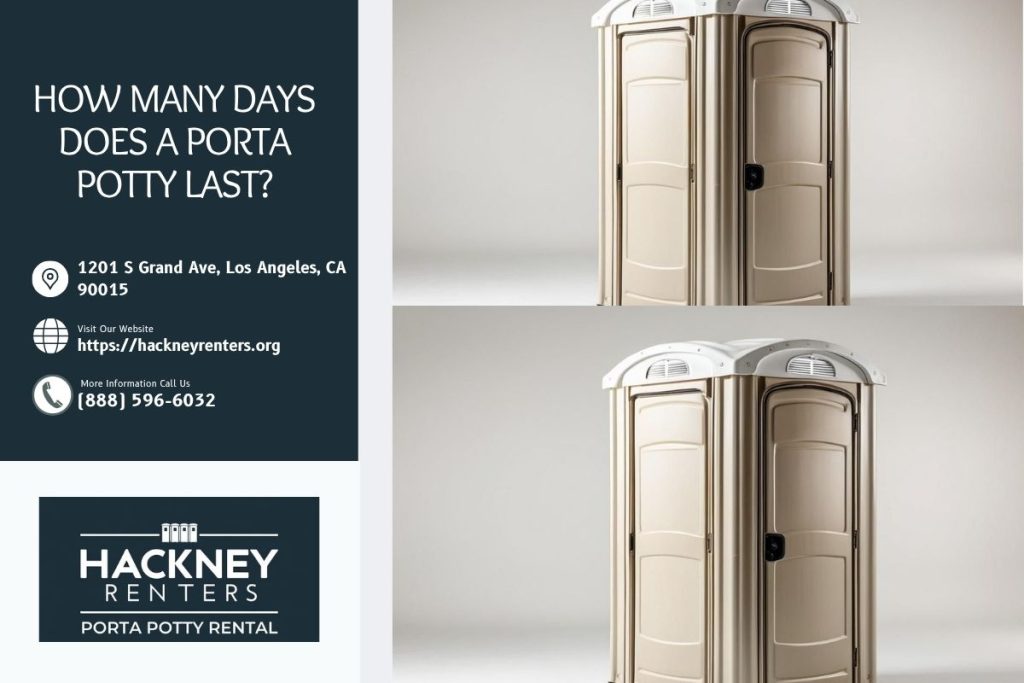
Standard porta potties accommodate 8-10 users per day for approximately 3-5 days before requiring service.
You'll need to calculate usage based on your specific event requirements and attendee count. Heavy-use scenarios with 15+ users daily reduce the service interval to 2-3 days maximum.
Weather conditions directly impact duration. Hot temperatures accelerate waste decomposition and odor development, requiring more frequent servicing.
Cold weather extends usability but creates freezing risks for hand sanitizer and waste tanks.
Tank capacity determines service frequency. Standard units hold 60-70 gallons of waste, while deluxe models accommodate 20% more.
You must schedule service before tanks reach 75% capacity to maintain sanitary conditions and prevent overflow incidents.
Peak usage periods like lunch hours and event breaks concentrate demand, potentially requiring emergency service calls despite adequate theoretical capacity.
See also: portable restroom rental service
When planning service intervals, you'll find most porta potties reach capacity after 40-50 individual uses under normal conditions.
This threshold varies greatly based on waste tank size, typically ranging from 60-250 gallons, and user demographics.
Construction sites with mainly male workers can extend intervals to 60-70 uses due to reduced solid waste volume.
Family events require more frequent servicing at 30-40 uses because of diverse user needs and higher toilet paper consumption.
You'll need expedited servicing during peak usage periods.
Hot weather increases odor concerns and chemical breakdown, requiring service every 2-3 days regardless of usage count.
High-traffic events demand daily servicing to maintain sanitary conditions and user satisfaction.
Monitor tank levels, paper supplies, and hand sanitizer regularly.
Replace units showing 70% capacity to prevent overflow incidents and guarantee regulatory compliance.
User density directly determines porta potty lifespan, with each extra person reducing operational intervals by approximately 8-12 hours under standard conditions.
You'll need to calculate capacity based on peak usage periods rather than average daily traffic.
The mathematical relationship follows predictable patterns:
You must monitor waste levels, toilet paper consumption, and hand sanitizer depletion rates.
Peak usage creates exponential degradation rather than linear decline, requiring proactive scheduling adjustments to prevent overflow situations and regulatory violations.
Multiple environmental and operational variables converge to determine your porta potty's service lifespan, creating complex interactions that require systematic monitoring and proactive management.
Temperature extremes accelerate waste decomposition and chemical breakdown, reducing effective service duration. High ambient temperatures increase bacterial activity, while freezing conditions compromise additive effectiveness and structural integrity.
Usage intensity directly correlates with depletion rates. Heavy traffic events exhaust capacity faster than anticipated, requiring accelerated service schedules. You'll need to monitor waste levels and chemical balance more frequently during peak usage periods.
Environmental exposure affects tank seals, pump mechanisms, and ventilation systems. UV radiation degrades plastic components, while moisture infiltration compromises structural elements.
Chemical additive quality determines odor control and waste breakdown efficiency. Premium formulations extend service intervals, while substandard products necessitate frequent maintenance interventions, increasing operational costs and reducing customer satisfaction.
Different event types generate vastly different usage patterns that'll directly impact your porta potty's effective service duration and maintenance requirements.
Construction sites typically require weekly service cycles due to consistent daily usage by the same workforce.
You'll need to account for extended occupancy periods and heavier waste accumulation patterns.
Festival environments demand more frequent servicing—often daily or every two days—because of high-volume, concentrated usage.
Peak demand periods can overwhelm standard capacity within hours.
Corporate events and weddings generally allow for longer service intervals since usage patterns remain moderate and predictable throughout shorter timeframes.
You'll enhance efficiency by matching service schedules to actual usage patterns rather than arbitrary timeframes.
Weather conditions significantly impact porta potty functionality and dictate ideal maintenance intervals beyond standard usage calculations.
You'll need more frequent servicing during hot weather, as heightened temperatures accelerate waste decomposition and increase odor intensity. Cold conditions slow bacterial breakdown but can freeze plumbing components, requiring antifreeze additives and insulated units.
Rain affects structural integrity and creates muddy access issues for service vehicles. You should schedule maintenance every 3-4 days during peak summer months versus 5-7 days in moderate conditions. Wind exposure demands secure anchoring and frequent inspections for stability compliance.
Your maintenance schedule must adapt to local climate patterns. Coastal areas require corrosion-resistant materials, while desert regions need UV-protected surfaces.
Temperature fluctuations between day and night cycles also influence the effectiveness of chemical treatment and waste processing rates.
Although regular maintenance schedules provide baseline servicing intervals, you must recognize immediate warning signs that indicate your porta potty requires urgent attention.
These critical indicators guarantee compliance with health regulations and maintain operational standards.
Monitor these crucial warning signs:
You'll prevent costly violations and user complaints by addressing these indicators immediately.
Among all servicing indicators, full waste tanks and persistent odors represent the most immediate threats to regulatory compliance and user safety.
You'll recognize a full tank when the waste level reaches the visible indicator line or when pump-out becomes necessary. Don't wait for overflow conditions, which create hazardous exposure risks and violate health department regulations.
Persistent odors signal bacterial decomposition exceeding normal parameters. You're dealing with insufficient chemical treatment, inadequate ventilation, or overdue servicing schedules. These conditions compromise air quality standards and user acceptance rates.
Monitor tank levels daily during peak usage periods. Schedule immediate pump-out services when tanks reach 75% capacity. Replace chemical additives according to manufacturer specifications.
You'll maintain regulatory compliance while ensuring an ideal user experience and preventing costly emergency interventions.
When supplies run low or sanitary conditions deteriorate, you're facing compliance violations that can shut down operations and damage your reputation. OSHA regulations mandate adequate toilet paper, hand sanitizer, and proper ventilation for worker sites.
You'll encounter immediate problems when basic amenities disappear.
Critical supply shortages create operational failures:
Professional servicing every 2-3 days prevents these costly shutdowns.
You're protecting your project timeline and meeting regulatory standards when you maintain consistent supply levels and cleanliness protocols.
While standard servicing schedules provide baseline maintenance, you can implement strategic measures to improve porta potty functionality between service intervals.
You'll optimize unit efficiency by establishing user guidelines that minimize waste accumulation and maintain sanitary conditions. Deploy hand sanitizer dispensers and signage promoting proper usage protocols to reduce contamination rates.
Monitor high-traffic units daily for supply depletion and structural issues. You can extend operational windows by implementing staggered service rotations based on usage patterns rather than fixed schedules.
Strategic placement away from direct sunlight reduces odor intensification and preserves chemical effectiveness.
Consider upgrading to units with improved ventilation systems and larger waste tanks for extended deployment periods.
Regular visual inspections enable proactive maintenance, preventing minor issues from compromising unit functionality and ensuring consistent service quality throughout rental periods.
Three critical factors determine your porta potty's cleaning and pumping schedule: usage frequency, waste tank capacity, and environmental conditions.
High-traffic events require more frequent servicing than low-usage construction sites. You'll need professional maintenance when waste levels reach 75% capacity to prevent overflow and maintain sanitary conditions.
Standard Scheduling Guidelines:
You should adjust these intervals based on temperature extremes, which accelerate waste decomposition and increase cleaning frequency requirements for regulatory compliance.
Beyond regular pumping schedules, proper deodorizer application and vital supply management directly impact your porta potty's operational lifespan and user satisfaction.
You'll need to apply blue deodorizing chemicals weekly or after each service visit to control odors and break down waste effectively. These chemicals maintain pH balance and prevent bacterial growth, which accelerates tank capacity reduction.
Stock critical supplies consistently: toilet paper, hand sanitizer, and seat covers.
You should check inventory levels during each cleaning cycle and replenish before the inventory is depleted. Running out of supplies forces premature service calls, disrupting your rental schedule.
Monitor deodorizer effectiveness through visual inspection—blue coloration should remain visible in the tank.
Replace or supplement chemicals when odor control diminishes, ensuring continuous user comfort throughout the rental period.
You can use porta-potties during the winter months with proper winterization. We'll add antifreeze to tanks, insulate units, and guarantee waste systems remain functional. Regular maintenance prevents freezing damage and maintains sanitary operations throughout cold seasons.
You'll typically need permits for public property placement, while private property usually doesn't require permits. Check local zoning laws, health department regulations, and HOA restrictions. We'll help you navigate compliance requirements for your specific location.
You'll typically pay $75-150 per day for standard porta potty rentals, depending on your location and unit type. Premium models with handwashing stations cost more. We'll provide exact pricing based on your specific requirements and rental duration.
Yes, you'll find ADA-compliant porta potties that meet wheelchair accessibility requirements. These units feature wider doors, interior grab bars, spacious interiors, and lower fixture heights. We guarantee all accessible units comply with federal accessibility standards for your events.
You're responsible for reporting damage immediately to avoid extra charges. We'll assess repair costs and bill accordingly. Vandalism may require police reports. Our rental agreement outlines specific liability terms and replacement fees for damaged units.